Towards a just conservation psychology - Stephanie Klarmann, University of Johannesburg (12 min)
Community driven conservation projects can protect natural spaces - Matthew Machell-Cox, Nandimvelo Outdoor Education (12 min)
Investigating the factors influencing the increasing cases of illegal cattle grazing in Ezemvelo KZN Wildlife protected areas in the KwaZulu-Natal Province, South Africa - Nonhle Mngadi, Ezemvelo KZN Wildlife (12 min)
Secondary vegetation provides a reservoir of non-timber forest products and agroforestry service options for forestry plantation systems in Maputaland, South Africa - Allister Starke, University of Pretoria (12 min)
Feasibility study to determine potential sites for sea cucumber (Holothuria scabra) farming in Zanzibar coastal waters - Masoud Juma Ali, Zanzibar Fisheries and Marine Resource Research Institute (12 min)
01 Nov 2022 02:00 PM - 04:00 PM(Africa/Johannesburg)
Venue : Parallel Session - The Bridge (Cutty Sark) CE Credit : 0.25
20221101T140020221101T1600Africa/JohannesburgSession 11: People and ParksSession Chair: Phindile Mthimkhulu, Ezemvelo KZN Wildlife (5 min)Towards a just conservation psychology - Stephanie Klarmann, University of Johannesburg (12 min)Community driven conservation projects can protect natural spaces - Matthew Machell-Cox, Nandimvelo Outdoor Education (12 min)Investigating the factors influencing the increasing cases of illegal cattle grazing in Ezemvelo KZN Wildlife protected areas in the KwaZulu-Natal Province, South Africa - Nonhle Mngadi, Ezemvelo KZN Wildlife (12 min)Secondary vegetation provides a reservoir of non-timber forest products and agroforestry service options for forestry plantation systems in Maputaland, South Africa - Allister Starke, University of Pretoria (12 min)Feasibility study to determine potential sites for sea cucumber (Holothuria scabra) farming in Zanzibar coastal waters - Masoud Juma Ali, Zanzibar Fisheries and Marine Resource Research Institute (12 min)Moderated Discussion (30 min)Parallel Session - The Bridge (Cutty Sark)The Conservation Symposiumsecretariat@conservationsymposium.com
Presentations for General SessionsProtected and Conserved Areas02:00 PM - 04:00 PM (Africa/Johannesburg) 2022/11/01 12:00:00 UTC - 2022/11/01 14:00:00 UTC
Climate change and biodiversity loss are serious concerns for environmental researchers and conservationists. However, the impacts of climate change and biodiversity loss disproportionately affect low-income, marginalised communities and indigenous groups. Conservation and environmental initiatives, however, sometimes perpetuate historical injustices of marginalised people where human needs and well-being are not met or used as a means to an end. We argue that environmental justice may be effectively merged with conservation psychology to promote justice-oriented conservation psychology in which conservation practice is foregrounded by efforts that promote well-being and equality, especially for historically marginalised groups impacted by conservation work and protected areas. We discuss a case study of a community based on the western border of the Kruger National Park, South Africa, impacted by conservation-related environmental injustices under apartheid. We discuss the role of capacity building in a community-based conservation initiative that simultaneously promotes justice, human well-being, and conservation goals using photography as a conservation tool and career opportunity. Specifically, we use the photovoice method to explore the experiences of a group of young black South Africans who have graduated from a capacity-building programme focused on photography and environmental education. The findings suggest that long-term engagement and a supportive network are key features of successful capacity building. Furthermore, learning photography skills is found to be both an appealing career path for the youth and improves the representation of young black photographers in conservation. Overall, the outreach approach provides insight into how capacity-building may provide an inclusive, empowering, and supportive foundation for historically disadvantaged youth and opens opportunities within the fields of conservation and/or photography-related careers. This provides insight into how justice-oriented conservation initiatives may look in a South African context.
Community driven conservation projects can protect natural spaces
Presentations for General SessionsProtected and Conserved Areas02:00 PM - 04:00 PM (Africa/Johannesburg) 2022/11/01 12:00:00 UTC - 2022/11/01 14:00:00 UTC
Without people, there is no conservation. Large protected areas like National Parks, game reserves and nature reserves are a fundamental aspect of effective conservation, but there are still countless small and marginalised natural spaces outside of these protected areas. These smaller conservation areas are often overlooked and left legally unprotected, but they are crucial in preserving biodiversity, improving habitat connectivity and supporting the lifestyles and livelihoods of people from all socio-economic groups. Traditional community conservation strategies and organised conservancies play a vital role in protecting these environments and ecosystems and can be the main driver for enforcing rules, regulations, and traditional stewardship, as well as generating local employment opportunities. They face significant resource limitations and lack formal governmental support but still manage to raise awareness and increase the protection of ecosystems within their area. What are the key strategies that conservancies employ to ensure small natural spaces are protected, and how do we replicate these strategies for the wide variety of communities in South Africa and beyond?
Investigating the factors influencing the increasing cases of illegal cattle grazing in Ezemvelo KZN Wildlife protected areas in the KwaZulu-Natal Province, South Africa
Presentations for General SessionsProtected and Conserved Areas02:00 PM - 04:00 PM (Africa/Johannesburg) 2022/11/01 12:00:00 UTC - 2022/11/01 14:00:00 UTC
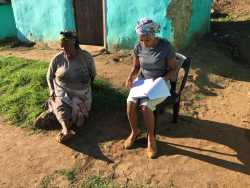
Many of Ezemvelo KZN Wildlife's protected areas are experiencing illegal cattle grazing, making this a critical management issue. In an effort to contribute to biodiversity conservation and management of protected areas, this study investigated the drivers behind the increasing cases of illegal cattle grazing. The objectives of this study were to obtain a better understanding of how cattle owners view and relate to protected areas, investigate the drivers behind cattle owners grazing their cattle inside protected areas, assess if cattle owners have intentions to stop illegal cattle grazing and interact with key informants on the matter. The study adopted a qualitative approach for collecting data through semi-structured household interviews, observations, and key informative interviews. Study areas were communities adjacent to Vernon Crookes Nature Reserve, Impendle Nature Reserve, and Ophathe Game Reserve. A total of 166 interviews were conducted, and data analyses were performed using Microsoft Excel and Stata 11.0 software. The majority of the participants, 96% (n = 161), indicated that they were aware that grazing inside the protected areas was illegal; nevertheless, 58% (n = 97) still admitted to grazing their cattle inside the protected areas. Most of the respondents (93%) felt that the conservation of the environment was important and necessary. The reasons for grazing cattle illegally differed across the three protected areas; they included the unavailability of grazing land, the poor-quality feed within their communal lands, and the lack of accessible grazing land. All three study areas did not have grazing management plans. The study observed the need to initiate a task team, including Ezemvelo KZN Wildlife and other relevant stakeholders, to focus on and address issues related to cattle ownership around protected areas and grazing within protected areas in keeping with organisational policies and protected area objectives.
Secondary vegetation provides a reservoir of non-timber forest products and agroforestry service options for forestry plantation systems in Maputaland, South Africa
Presentations for General SessionsLandscape and Ecosystem Conservation02:00 PM - 04:00 PM (Africa/Johannesburg) 2022/11/01 12:00:00 UTC - 2022/11/01 14:00:00 UTC
In southern Africa, non-timber forest product (NTFP) plant species provide diverse livelihood products and occur in both natural and secondary vegetation, and yet their value to agricultural systems remains largely unrecognised. This study assessed the NTFP and agroforestry system (AFS) value of native plant species growing at Manzengwenya forestry plantation estate on the Maputaland coastal plain. The assessment specifically considered how differences in forestry plantation management had affected the provision of native plant resources and how to incorporate these plant species into a forestry plantation system. Varying patterns of agricultural disturbance combined with differences in forest and woodland recovery processes influence the species composition of secondary vegetation and, ultimately, the availability of NTFPs. Sampling occurred in four vegetation communities: natural forest, mature and regrowth forest, abandoned plantation compartments within naturalising forest, and secondary woodland. We developed a species-use matrix for the woody species that occurred across these communities and analysed the potential plant uses of each. Secondary vegetation growing in abandoned plantation compartments contained plant species which could provide medicinal and spiritual resources, food and beverage products, building, fuel and craft products, gums, oils, and resins. In addition, many species provided agroforestry options as they provide fodder or could be used for intercropping. In abandoned clear-felled compartments, the development of a secondary woodland contained fire-adapted woodland species (e.g. Marula and iLala Palm) and therefore held a unique socio-economic value when compared to naturalised forest growing in the understory of unfelled plantation compartments. In water-limited ecosystems such as the Maputaland coastal plain, many naturally regenerating native species hold value to the communities which neighbour the plantation. These vegetation systems could be managed as resource areas, such that they buffer wetland systems, or as silvopastures that function to protect plantation compartments from unplanned fire. Given that many species hold multiple uses, AFS practices such as shelterbelts or boundary systems have further potential to provide locally useful plant resources, thus adding socio-economic value to forestry plantation systems.
Feasibility study to determine potential sites for sea cucumber (Holothuria scabra) farming in Zanzibar coastal waters
Presentations for General SessionsSpecies Conservation02:00 PM - 04:00 PM (Africa/Johannesburg) 2022/11/01 12:00:00 UTC - 2022/11/01 14:00:00 UTC
Aquaculture in Zanzibar contributes significantly to the socio-economic sector by improving the economy through income, food security, and employment. In this context, many inhabitants from coastal areas of Zanzibar engage in sea cucumber (Holothuria scabra) farming as a new opportunity. Most farmers install sea cucumber farming systems without considering the importance of site selection as a key aspect of getting favourable environmental parameters. This study aimed to identify the potential sites for sea cucumber farming in Zanzibar coastal waters. Samples were taken in September 2019 at 24 villages on Unguja and Pemba islands, with 16 on Unguja and eight on Pemba. Site visits and observations collected quantitative data on the physical appearance of the areas. Face-to-face semi-structured interviews were carried out with about 10–12 respondents at each site, covering questions on effective areas for establishing sea cucumber farms, community interest in sea cucumber farming, sites where Holothurian species are found or were previously found, and reasons for the disappearance of sea cucumbers. Water quality parameters such as temperature, salinity, and pH were measured using YSI water sampling equipment. The results indicate that all 24 selected sites are suitable for sea cucumber farming. The water sample temperature ranged from 26–29 oC, salinity was 34.5–35.0 ppt, and pH was 7.0–7. About 99.5% of the Pemba community was very interested in sea cucumber farming, and the remainder was not. On Unguja, about 78% of the community was interested, 12% were not, and 10% were not yet sure. The 21.5% difference in interest between the two islands is because Unguja has a greater variety of possible livelihoods than Pemba. Based on the results, the fishery management should demarcate the sea cucumber spawning sites to allow the conservation of these species. Fishery managers should protect those sites where sea cucumbers are more common and not allow any anthropogenic activity that will destroy the benthic environment preferred by sea cucumbers e.g. seagrass. This would improve the sea cucumber resources. Managers should also formulate by-laws and specific interventions that allow the installation of sea cucumber farms at those sites where sea cucumbers were previously found but have since disappeared. This would encourage the restoration of sea cucumber resources and, through this, will reduce the capture of wild stock since the farmers will get the seeds for their farms. Policymakers and fishery managers should develop management guidelines for sea cucumber farming to improve the sea cucumber populations. These guidelines would guide the farmer on installing farms without destroying the benthic community, how to escape ghost fishing, and how to restore or form aquaculture enhancement of the sea cucumber.
Presenters Masoud Juma Ali Zanzibar Fisheries And Marine Resource Research Institute Co-Authors

 Stephanie Klarmann
  Nonhle Mngadi
 Masoud Juma Ali